









ISO 10328: Prosthetics – Structural testing of lower-limb prostheses – Requirements and test methods
Lower-limb prostheses do a demanding job every day. They carry load, transfer movement, withstand repeated steps and must remain reliable under defined mechanical conditions.
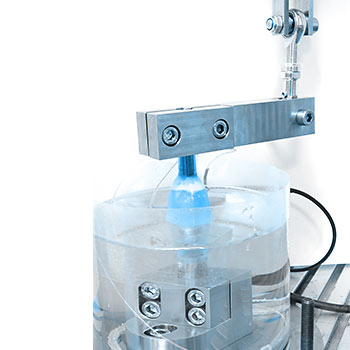
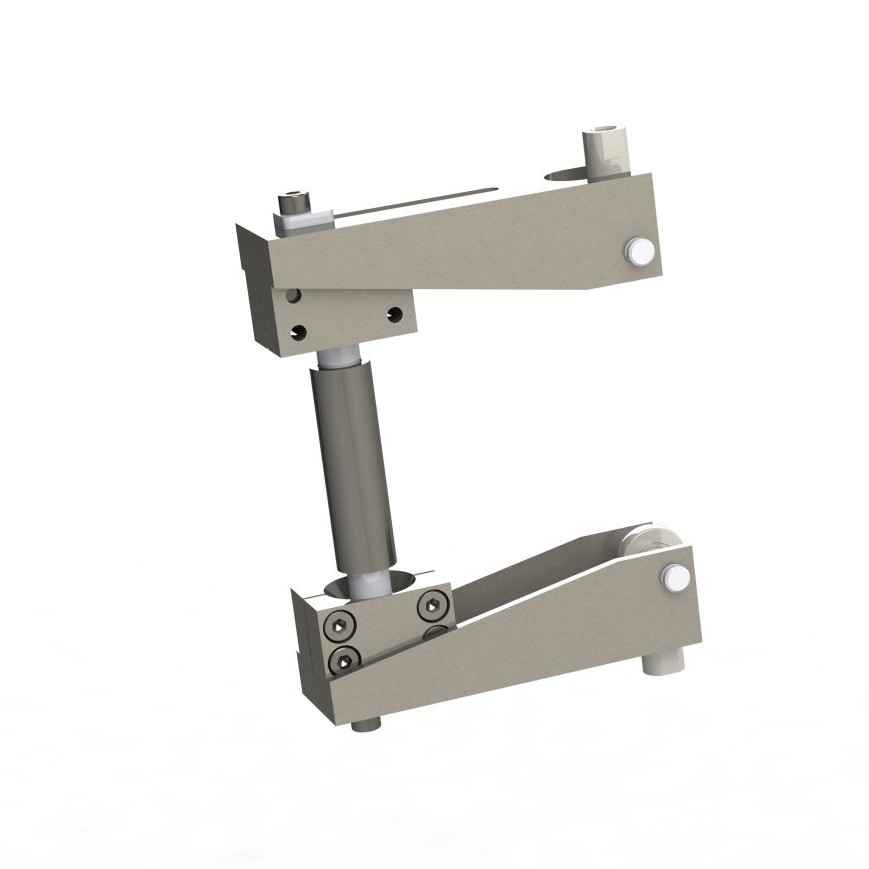
ISO 10328 is a 148-page summary of test methods for complete lower limb prosthesis as well as specific components such as the ankle-foot device or the knee flexion mechanism. The number of samples, static and dynamic tests, as well as performance criteria, are defined. The test loads might also serve as a reference for static and dynamic testing of osteointegration in(transfemoral) implants.
Read more…
Significance and Methodology
Real walking is mechanically complex. A lower-limb prosthesis is not exposed to just one simple force, but to a combination of compression, shear, bending and torque. ISO 10328 turns this complexity into reproducible laboratory test conditions.
Static tests evaluate how a structure behaves under severe single-event loads, while cyclic tests assess fatigue strength under repeated loading that represents the regular load pattern of walking. The principal structural tests include:
- static proof testing
- static ultimate strength testing
- cyclic testing followed by a final static load
For components with special functions, ISO 10328 adds separate tests. Foot units are tested under heel and forefoot loading, knee units may be tested in maximum flexion, and knee locks are tested under conditions where heel loading tends to flex the locked knee. Torsion is addressed separately as well.
Controlled Test Parameters
The standard defines the test forces, moments, offsets, angles, segment lengths and cycle counts for the applicable loading levels. These parameters depend on the component, test type and selected loading level.
For cyclic testing, the prosthetic structure is repeatedly loaded over a prescribed number of cycles and then assessed according to the relevant performance requirements.
Accuracy is also an important part of the test. ISO 10328 specifies tolerances for dimensions, angles, forces, moments and test frequency. The test setup must therefore be carefully aligned, measured and documented in addition to applying the required loads.
Test Samples and Alignment
Test samples are normally taken from regular production. Depending on the scope of testing, they may be complete prosthetic structures, partial structures or individual components.
Alignment is a central part of the test method. ISO 10328 defines coordinate systems, reference planes and load application points so that the applied mechanical loading can be reproduced consistently.
Adjustable components are set according to the required test condition, often representing a worst-case alignment. The result therefore applies to the submitted device, the selected configuration and the alignment used during testing.
Ankle-Foot Devices and Foot Units
Ankle-foot devices and foot units receive dedicated attention in ISO 10328. Separate tests apply heel and forefoot loading to represent two important directions of load transfer during use.
The selected foot size must represent the relevant worst-case loading for the device type, and the rationale for the selection has to be documented.
If a foot unit is detachable, the standard also defines how the foot and the remaining prosthetic structure are handled within the test programme. This allows the foot to be assessed under foot-specific loading while the remaining structure is evaluated under the applicable principal structural conditions.
Knee Units and Knee Locks
Knee components are subject to additional test conditions because of their specific mechanical function. ISO 10328 includes a separate static ultimate strength test in maximum knee flexion for knee joints and associated components. This represents demanding loading situations such as kneeling or deep knee bending.
Knee locks are evaluated separately. The test condition represents heel loading that tends to flex the knee while the lock holds the joint in extension.
If the lock position or alignment is adjustable, the test setup must represent the relevant condition defined for the evaluation.
Documentation and Compliance
ISO 10328 testing also places strong emphasis on traceability. The test submission documentation identifies the device, sample type, assembly details, alignment, tightening torques, relevant attachments and requested test conditions.
A compliance claim must state the test loading level. It applies to the tested prosthetic assembly and alignment and does not automatically cover every possible configuration. Additional configurations need to be justified within the range represented by the tested setup.
Testing at EndoLab
EndoLab performs structural testing of lower-limb prosthetic devices according to ISO 10328. The standard provides the framework, while the individual test setup translates the submitted device into a clearly defined mechanical assessment.
From static proof and ultimate strength testing to cyclic fatigue testing, and from ankle-foot devices to knee units and knee locks, each test is prepared, aligned, loaded and documented according to the applicable requirements of the standard.