












ISO/TR 18130: Dentistry – Screw loosening test using cyclic torsional loading for implant body/implant-abutment connection of endosseous dental implants
This technical report provides a test method to determine the extent of screw loosening of the implant body/implant-abutment joint by applying a cyclic alternating torsional load. This test is most appropriate for evaluating new types of metallic connecting parts used for two- or multi-part implants.
EXECUTIVE SUMMARY
The test evaluates how repeated clockwise and counter-clockwise torsional loading affects the stability of an implant body/implant abutment screw connection.
The basic evaluation includes:
- determination of the initial screw removal torque
- application of cyclic alternating torsional loading
- determination of the screw removal torque after cyclic loading
- visual assessment of wear, deformation or fracture at the connection
At least six specimens are used for the initial removal torque evaluation and at least six additional specimens for the cyclic torsion test. The cyclic test is continued for up to 100,000 cycles.
Read more…
Purpose of the test
The connection between implant body and implant abutment must resist the mechanical loads that occur during function. These loads can include significant torsional components.
If the anti-rotational connection or screw joint does not provide sufficient stability, effects such as screw loosening, deformation or fracture of the connected components can occur. ISO/TR 18130 therefore provides a comparative laboratory method for assessing the behaviour of the connection under repeated torsional loading.
The method is intended for comparative mechanical evaluation and is not designed to reproduce or predict the clinical performance of an implant system.
Finished device testing
Testing should be performed using finished devices or specimens with an implant-abutment connection equivalent to the marketed device. The relevant components should therefore represent the final manufacturing condition.
If the implant components are intended to be sterilized by the clinician before use, sterilization should also be performed before testing unless there is evidence that the specified sterilization process has no significant effect on the relevant material properties.
For implant systems with several abutment variants that use the same connection interface, a straight abutment with a metallic connecting interface is selected for the test. Angulated abutments are not suitable for this method because the connected specimen must have a straight central axis.
Specimen preparation
The implant abutment and any applicable connecting component are assembled to the implant body using the specified screw.
The tightening torque is applied according to the manufacturer’s instructions for use. New components that have not previously been assembled are used for both the initial removal torque measurement and the cyclic loading test.
Using the specified tightening procedure is important because the subsequent removal torque is evaluated relative to the initial screw tightening condition.
Initial screw removal torque
The initial screw removal torque establishes a reference value before cyclic loading.
The implant components are assembled using the manufacturer’s specified tightening torque. After five minutes, the torque required to loosen the screw is measured.
The procedure is performed using at least six specimens, and the mean value and standard deviation of the initial screw removal torque are calculated.
Cyclic torsional loading
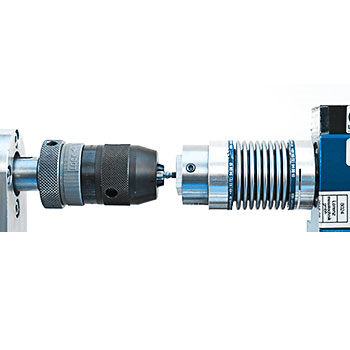
For the cyclic test, the implant body and abutment are securely held in a torsional test system and aligned along a common central axis.
Alternating torque is applied clockwise and counter-clockwise to the implant abutment. The cyclic torque corresponds to 10 % of the screw tightening torque specified by the manufacturer. Testing is continued for up to 100,000 cycles.
The purpose of this loading is to repeatedly stress the implant-abutment connection without intentionally loosening the screw, allowing changes in the stability of the joint to be assessed.
Screw removal torque after cyclic loading
If the specimen completes 100,000 cycles without deformation or fracture, the screw removal torque is measured again.
At least six specimens are evaluated, and the mean and standard deviation of the post-test screw removal torque are determined.
If a specimen fails before reaching 100,000 cycles, the number of cycles completed before failure is recorded instead. The implant body/abutment connection is also inspected microscopically for wear, deformation or fracture.
Evaluation
The evaluation focuses on the change in screw removal torque caused by cyclic torsional loading.
Two relationships are considered:
- the initial screw removal torque relative to the specified screw tightening torque
- the screw removal torque after cyclic loading relative to the initial screw removal torque
These values help characterize how well the screw joint maintains its mechanical stability during repeated torsional loading.
The test report additionally documents the connection design, specimen configuration, applied tightening torque, cyclic torque, number of cycles and any observed wear, deformation or fracture.