


























































ASTM F1875: Standard Test Method for Long-Term Fretting Corrosion Testing of Modular Implant Interfaces: Hip Femoral Modular Head-Bore / Cone Taper Junctions
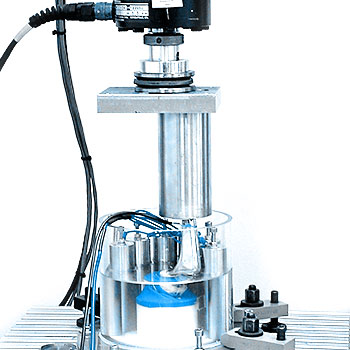
ASTM F1875 describes test, analysis, and characterization methods for evaluating the long-term fretting corrosion behavior of modular hip femoral head-bore and cone taper junctions under cyclic loading in a corrosive environment.
The method is intended for comparative testing of final-finished femoral heads in combination with final-finished stems or simulated trunnion specimens. It does not predict in vivo performance. Instead, it provides defined test conditions for comparing fretting and fretting corrosion behavior between different implant designs, material combinations, and construct configurations.
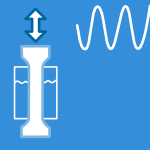
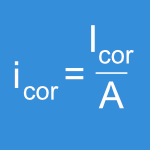
Testing is performed under cyclic compressive loading for a minimum of 10 million cycles. After testing, the resulting damage is assessed by visual scoring and, where applicable, by quantitative methods such as metal ion analysis and electrochemical measurements.
ASTM F1875 also describes a short-term electrochemical screening approach that may be used during design development to compare design parameters, material combinations, or surface treatments, and to support worst-case selection for long-term testing. This screening test is provided as additional, nonmandatory guidance and does not replace the long-term performance evaluation.
Whenever your THR design includes a modular femoral head–neck junction, and you need evidence on fretting/fretting-corrosion at the taper interface. It’s also referenced within ISO 21535’s normative set.
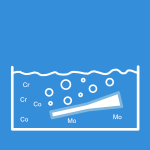
Corrosion, discoloration or debris on the taper surfaces and dulling of machine lines as well as particle and ion release into the test fluid.
Typical complementary evaluations include static disassembly testing according to ISO 7206-10 or ASTM F2009, visual and optical assessment of the bore and cone taper contact surfaces (Goldberg score), SEM/EDS analysis, and metal ion or particle analysis (ASTM F1877 and ASTM F561) of the test solution.
Yes. According to ASTM F1875-26, the observed or measured fretting corrosion damage of the device under evaluation shall be equivalent to or lower than that of a reference implant.